
Caffeine Gum for Running
By Blake Settle, founder of REV Gum.
Caffeine is one of the few supplements with consistent evidence for endurance performance. The open question for most runners is not whether to use it but how: a coffee an hour before, a gel with caffeine mid-race, or something else. This article covers what the research says about caffeine gum specifically, how runners time it, and where it fits next to gels. We make caffeine gum, so weigh that as you read.
What the running research shows
Whalley, Dearing and Paton (International Journal of Sports Physiology and Performance, 2020) tested caffeinated gum on 5-km running performance and found it improved times compared with placebo. An earlier study by Paton and colleagues (Journal of Sports Sciences, 2010) found caffeinated gum reduced fatigue in trained sprinters across repeated sprints.
These are gum-specific studies, which matters because most caffeine research uses capsules or drinks. The gum studies confirm the effect carries over when the delivery method changes.
The underlying mechanism is the same as any caffeine: it blocks adenosine receptors, which lowers perceived effort and helps you hold pace when you would otherwise slow. Gum does not add anything to that. What it changes is how fast the caffeine gets in and what else you have to swallow to get it.
Why gum instead of coffee, gels, or pills
Speed. Caffeine from gum is absorbed through the lining of the mouth and is typically felt in 5 to 10 minutes. Kamimori et al. (International Journal of Pharmaceutics, 2002) showed gum is absorbed faster than capsules. Coffee or a pill takes 30 to 45 minutes, which means guessing your warm-up timing.
No GI load. Runners already manage a lot going through the stomach on race day: breakfast, fluids, gels. Gum puts nothing in the stomach except what you swallow in saliva. If caffeine in coffee or a gel has upset your stomach on a run, gum is the obvious thing to try. It does not carry a fuel payload, though, so it is not a gel replacement. It is a caffeine replacement.
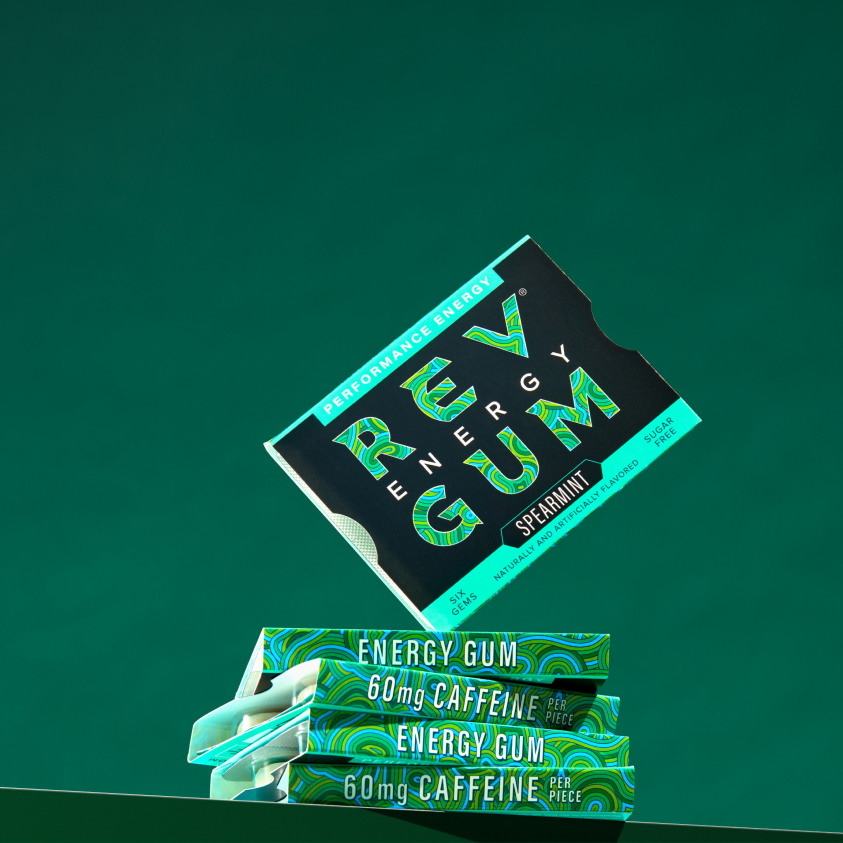
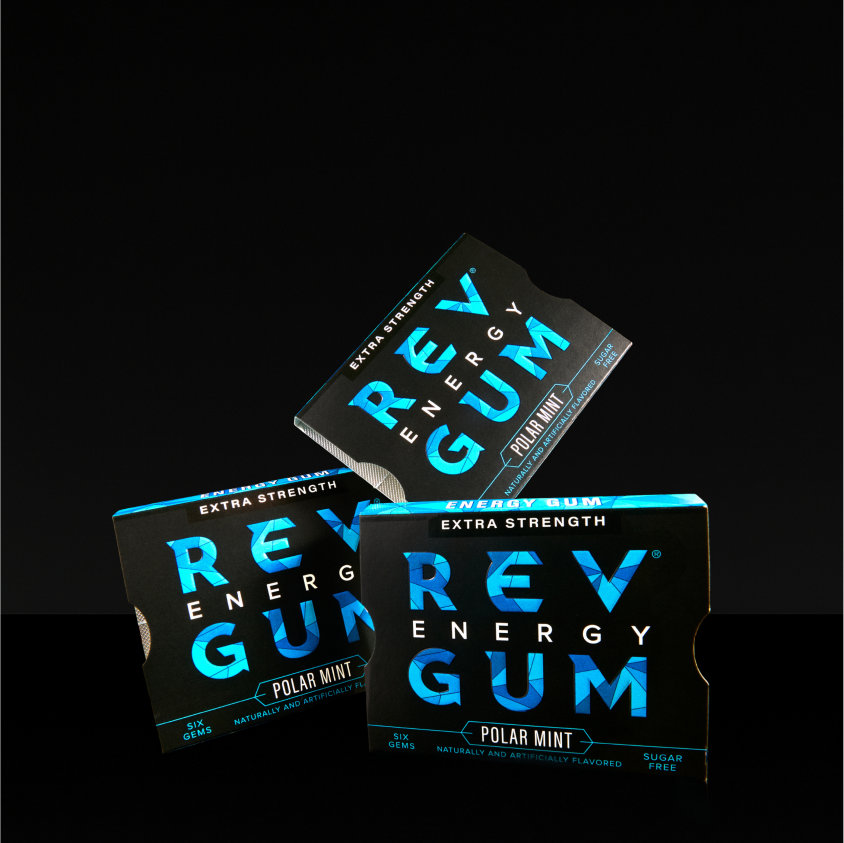
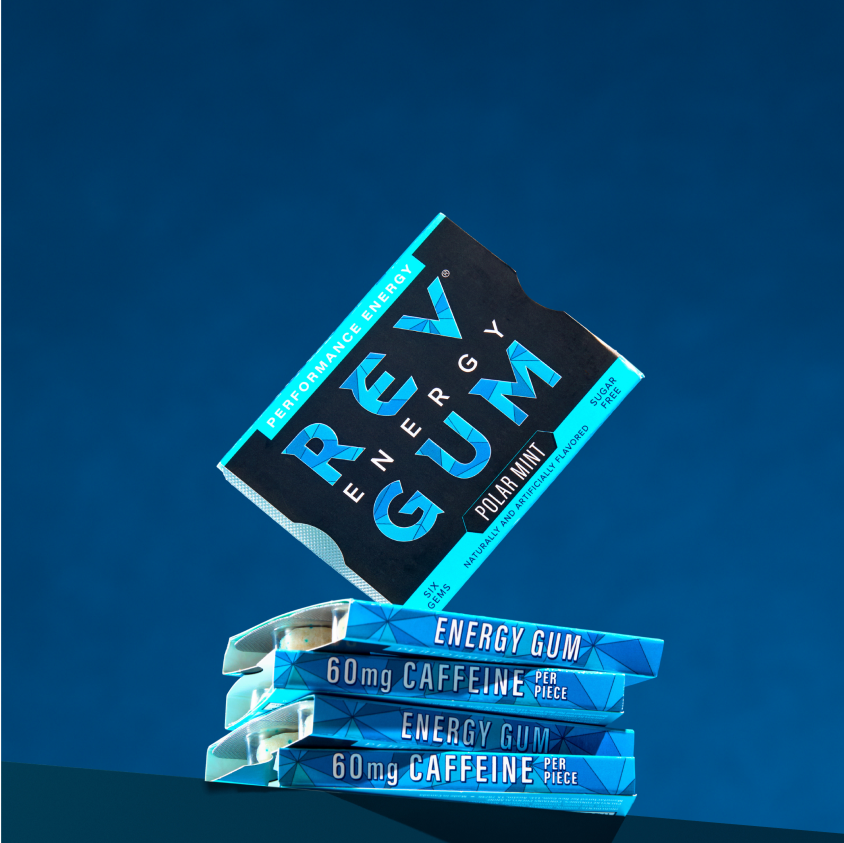
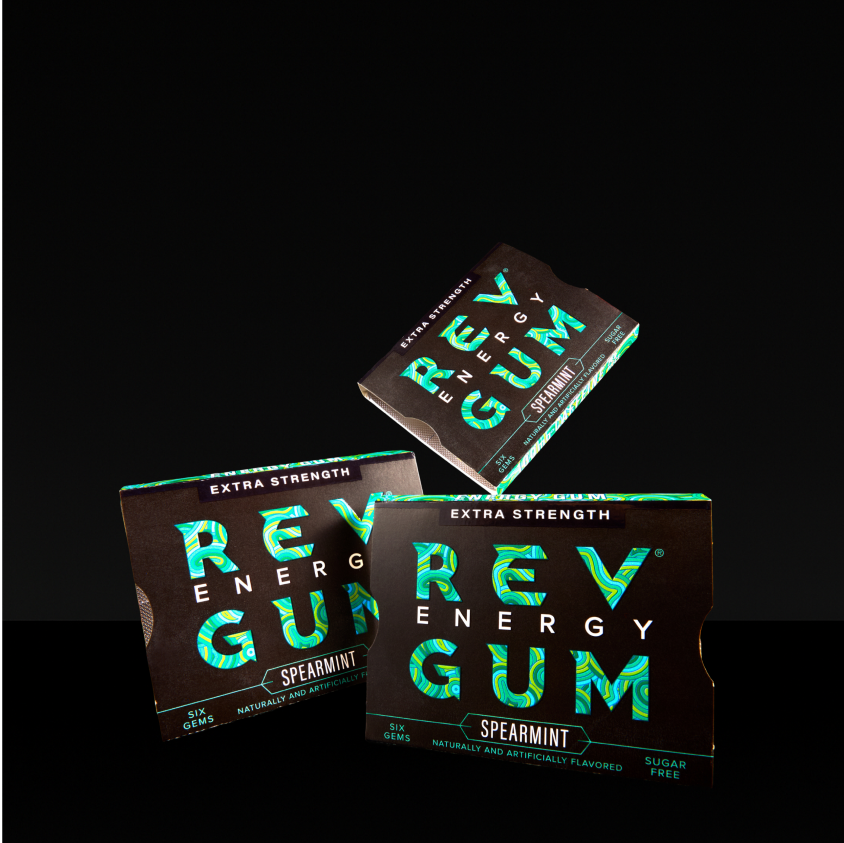
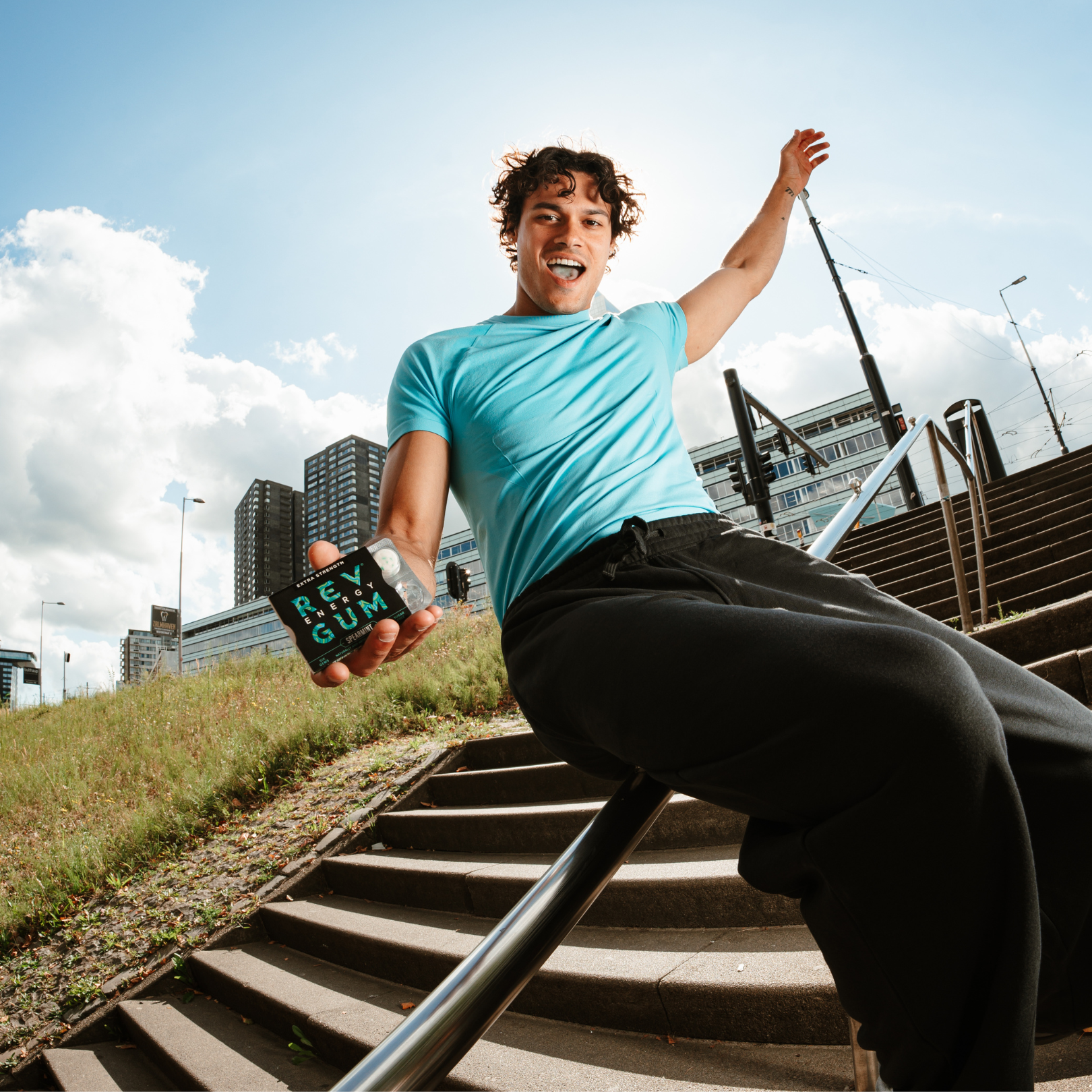
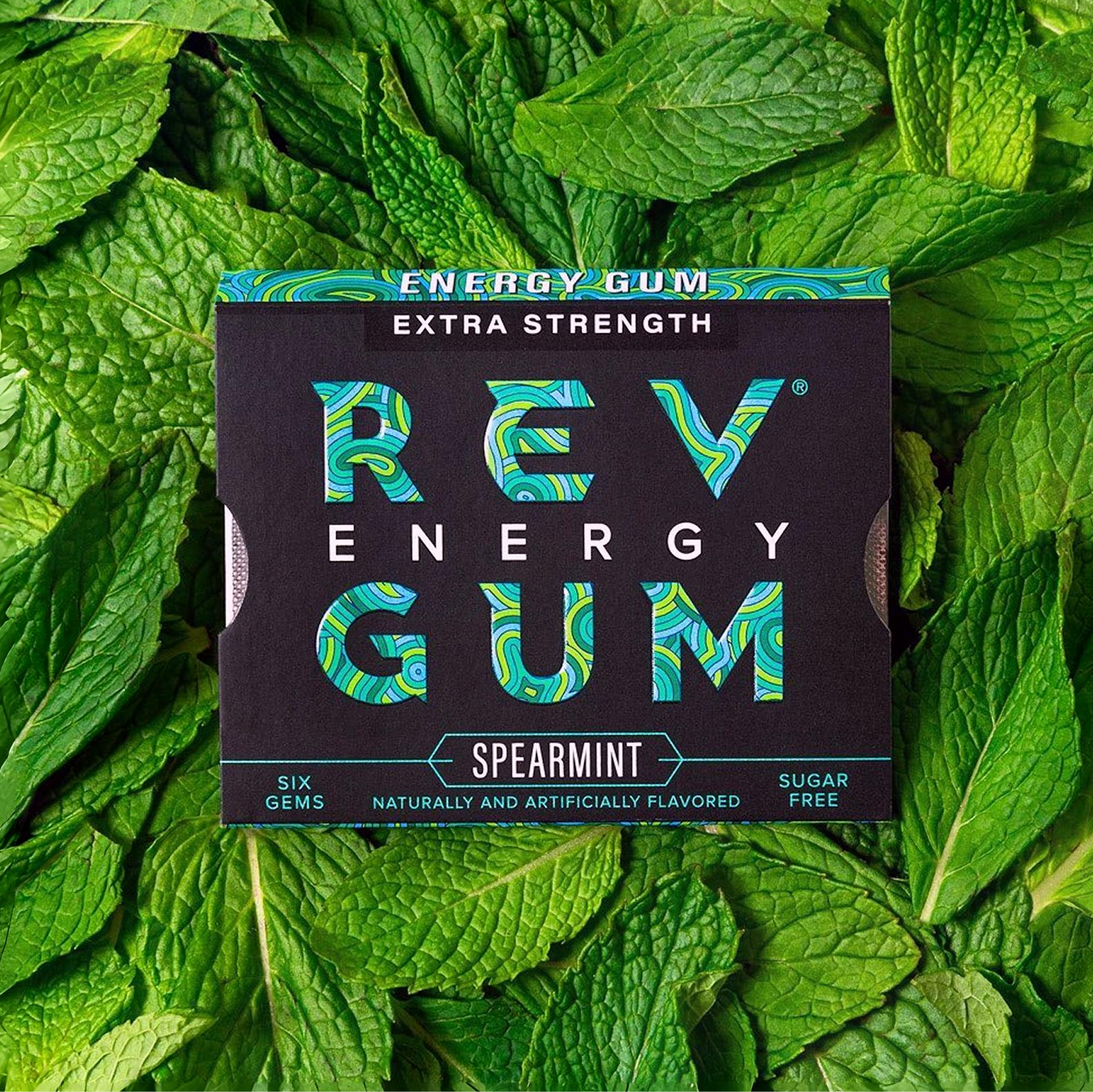
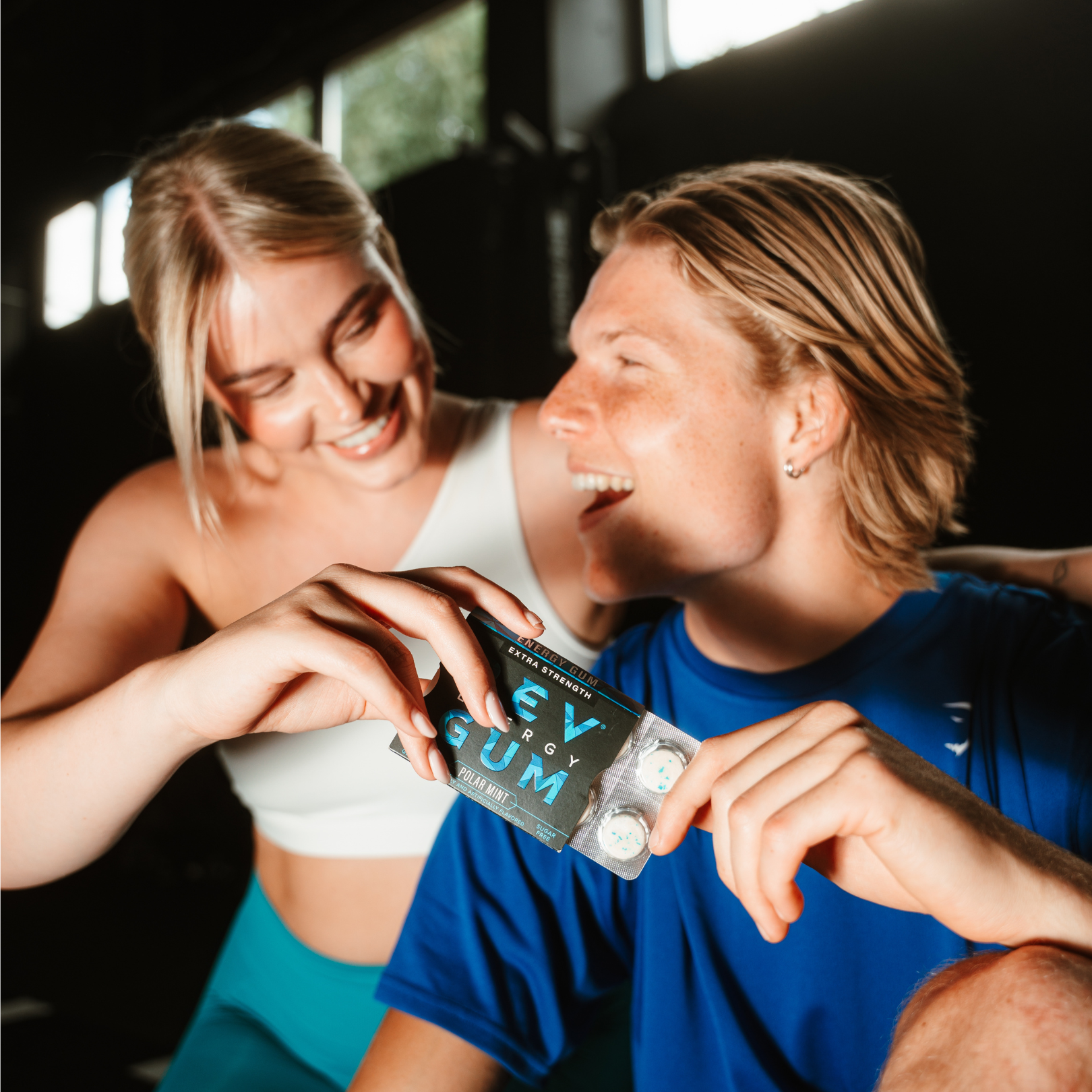
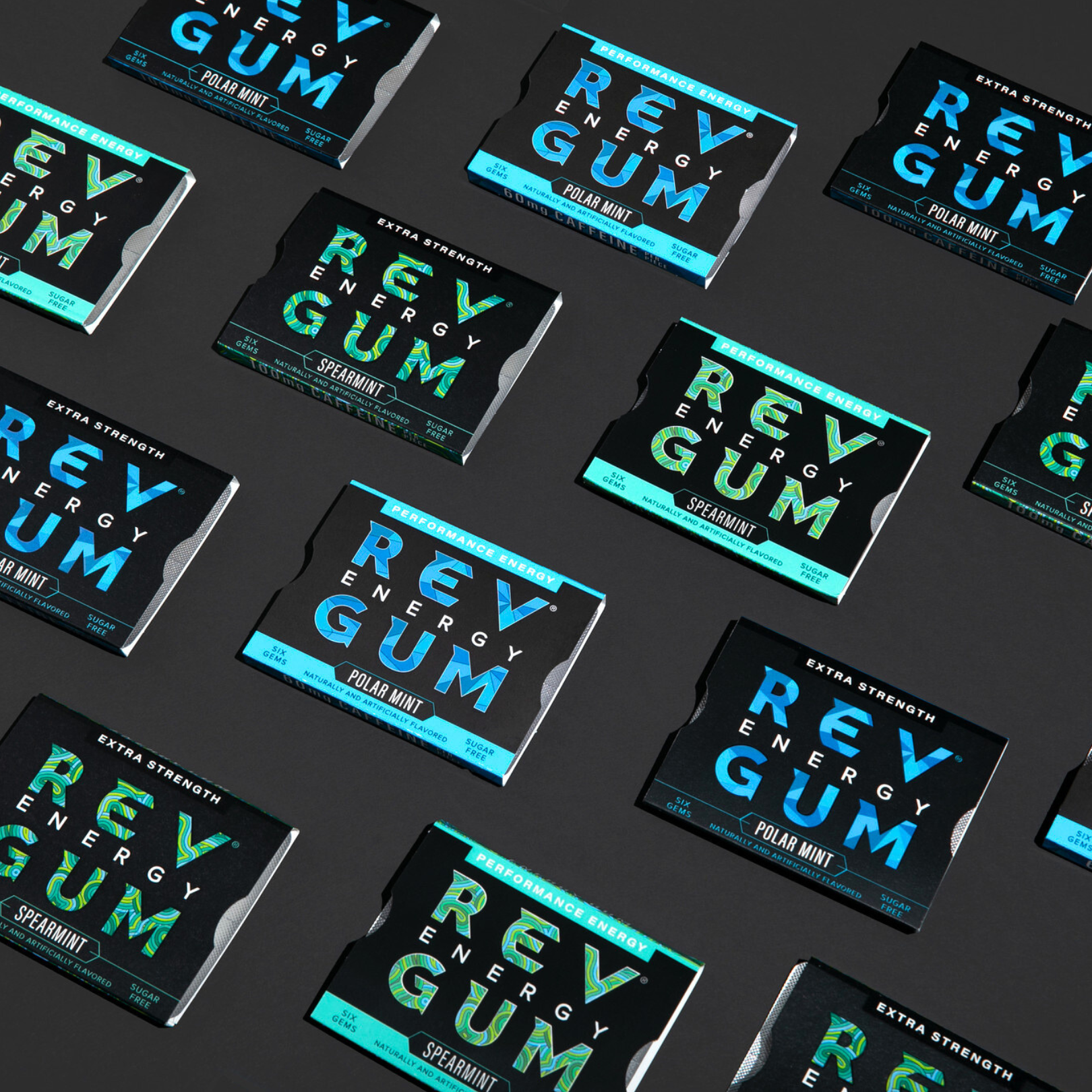
Fixed dose. REV Energy Performance is 60 mg per piece; REV Energy Extra Strength is 100 mg. You know exactly what you took. A coffee could be 60 mg or 200 mg depending on where you bought it.
Nothing extra. REV is caffeine only: no L-theanine, no B-vitamins, no taurine, no sugar. If you are dialing in a race-day protocol, one variable is easier to manage than four.
How much caffeine for running
Sports-nutrition research on caffeine commonly uses doses in the range of 3 to 6 mg per kilogram of body weight. For a 70 kg (154 lb) runner, 3 mg/kg is 210 mg, roughly two REV Extra Strength pieces.
That said, a lot of runners do well on less. If you are new to caffeine or race in the morning after coffee, start with one 60 mg piece and see. More caffeine is not linearly better and above a certain point the jitters cost you more than the caffeine gives you.
Keep your total under the FDA's general guidance of 400 mg per day, counting everything.
When to chew: before or during
Before the start. Because gum acts in about 5 to 10 minutes, you can chew during the last part of your warm-up. Chew for at least 5 minutes, then spit it out before the gun. You do not want to be chewing gum while racing hard.
During a long run or race. For a half marathon or longer, some runners save a piece for the back half. Chew it for 5 minutes at an easy stretch, or at an aid station where you have slowed anyway. It hits within minutes, unlike a caffeinated gel that still has to get through the stomach. Chewing while running at an easy pace is fine; chewing while going hard is a choking risk, so use judgment.
Practice in training first. Anything you plan to do on race day should be tested on a hard workout first. That goes for gum too.
Gum vs caffeinated gels
| Caffeine gum (REV) | Caffeinated gel | |
|---|---|---|
| Caffeine per serving | 60 or 100 mg, fixed | Varies by brand, often 25–100 mg |
| Carbohydrate | None | Yes, usually 20–25 g |
| Onset | ~5–10 min | ~30–45 min |
| Goes through stomach | No | Yes |
| Water needed | No | Usually |
| Sugar | None | Yes |
Gel figures are general category ranges, not a specific product. The right answer for most runners is both, used for different jobs: gels for carbohydrate, gum for caffeine.
Electrolytes
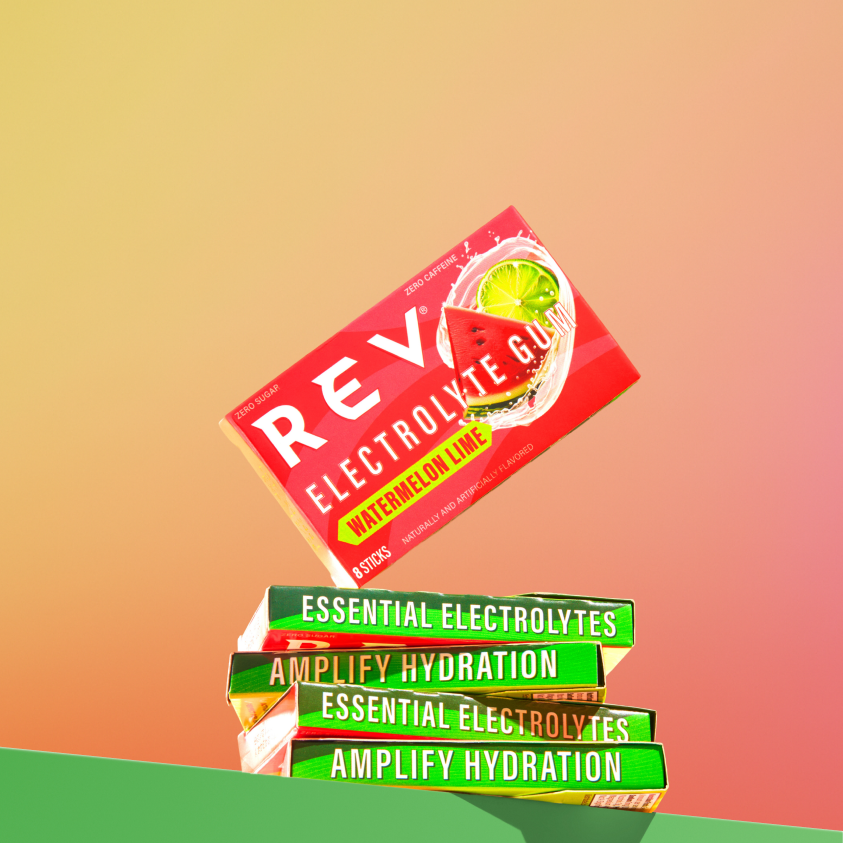
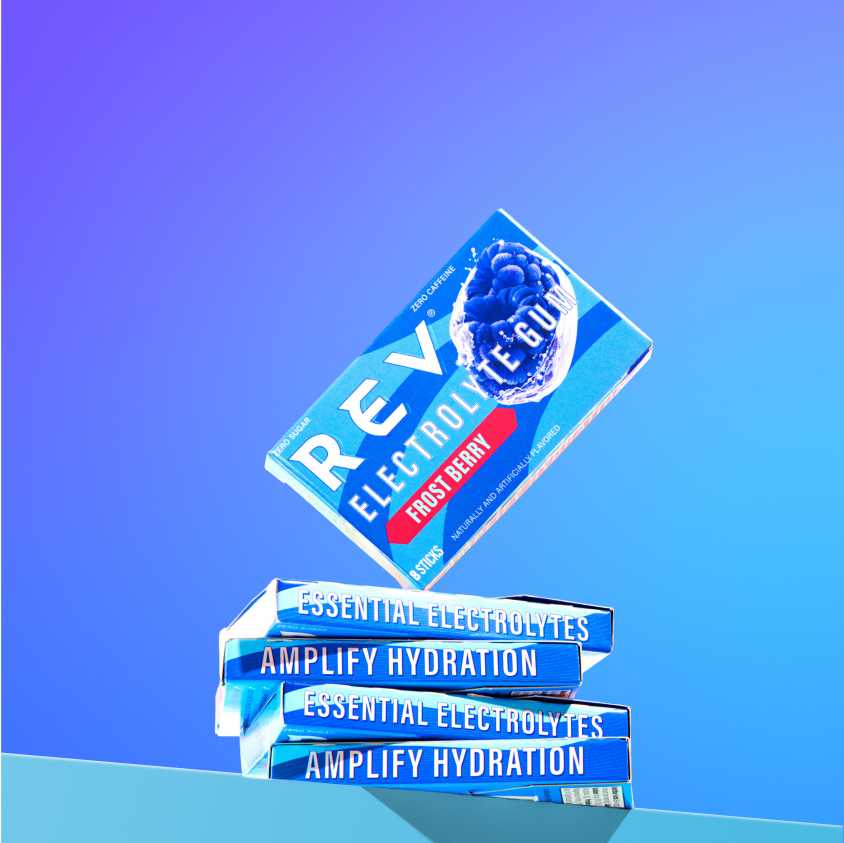
REV also makes a caffeine-free Electrolyte Gum with 64 mg potassium and 4 mg magnesium per piece, in Frost Berry and Watermelon Lime. It contains no sodium, so it is not a replacement for a sodium-based hydration plan on a hot day. Some runners use it for the potassium and for something to chew on long easy runs.
Where to learn more
- Caffeine gum, explained: the full guide to how it works.
- REV vs Neuro Gum: the two most common brands compared.
- Our studies blog: the research, summarized.
- REV Energy Performance (60 mg) and REV Energy Extra Strength (100 mg).
FAQ
Does caffeine gum improve running performance?
In a peer-reviewed study (Whalley, Dearing & Paton, IJSPP 2020), caffeinated gum improved 5-km running performance compared with placebo. Caffeine in general is one of the best-supported performance supplements.
When should I chew caffeine gum before a run?
About 5 to 10 minutes before you start. Chew for at least 5 minutes, then spit it out before racing hard.
Can I chew caffeine gum during a race?
Yes, at an easy pace or aid station. Chewing while running hard is a choking risk. Many runners save a piece for the back half of a longer race.
How much caffeine gum should a runner take?
Start with one 60 mg piece. Research often uses 3 to 6 mg per kilogram of body weight, which for a 70 kg runner is about 210 mg at the low end, roughly two 100 mg pieces. Stay under 400 mg per day from all sources.
Is caffeine gum easier on the stomach than gels?
It puts nothing in the stomach other than saliva, so it avoids the GI load of gels and drinks. It also carries no carbohydrate, so it is not a fuel replacement.