

STUDY: Caffeine Gum Enhances Athletes Performance
What if you could chew something at half-time to come out stronger for the second half? Researchers tested caffeine gum during a simulated half-time with professional rugby players — and found a notable hormonal shift, with an important nuance on performance.
The Study at a Glance
Design: Double-blind, randomized, counterbalanced crossover trial
Published: Journal of Strength and Conditioning Research, 2020
Participants: 14 professional academy rugby union players
Intervention: During a 15-minute simulated half-time, players chewed caffeine gum (400 mg, ~4.1 mg/kg) or placebo for 5 minutes, then completed a second repeated-sprint test
Measured: Repeated-sprint performance, blood lactate, cognitive function (reaction time, Stroop test), and salivary testosterone and cortisol
What They Found
The standout result was hormonal: after half-time, salivary testosterone rose 70% higher in the caffeine group versus placebo (p<0.001), while cortisol (the stress hormone) stayed flat. Testosterone in this context is associated with increased motivation and readiness for high-intensity effort. That said, the researchers were straight about the limits: in this particular protocol, sprint performance and cognitive scores were not significantly different between caffeine and placebo. Their practical takeaway was that practitioners may still choose caffeine gum between exercise bouts because of that testosterone response — a marker linked to high-intensity performance.
Why This Matters for REV
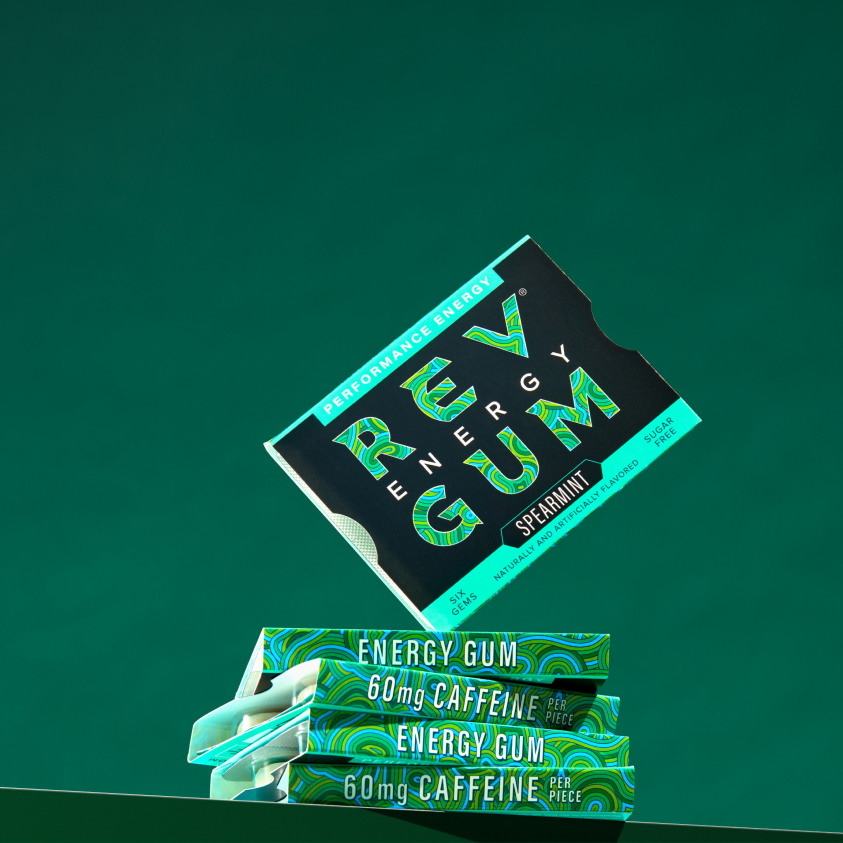
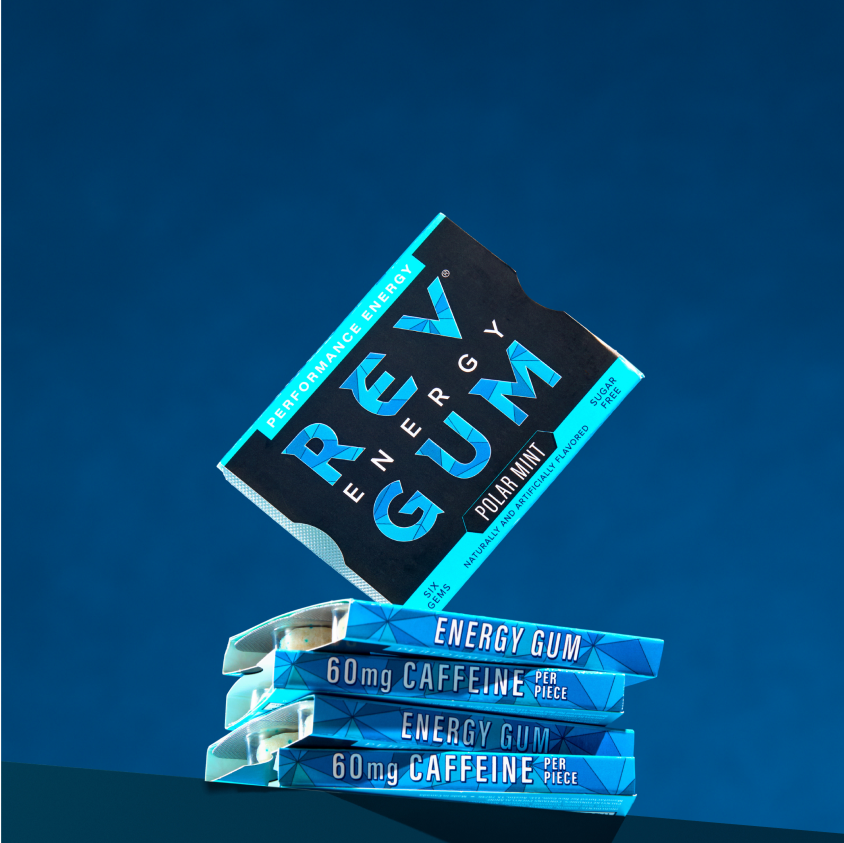
This study captures REV's exact scenario: a quick chew during a short break to prime you for what's next — a second half, a second set, the back end of a shift. The format fits where drinks and capsules don't: 5 minutes of chewing during a 15-minute break, no liquid, fast buccal absorption. It's also a reminder that caffeine works through multiple pathways — alertness, perceived effort, and, as shown here, an acute hormonal response.
A Few Caveats
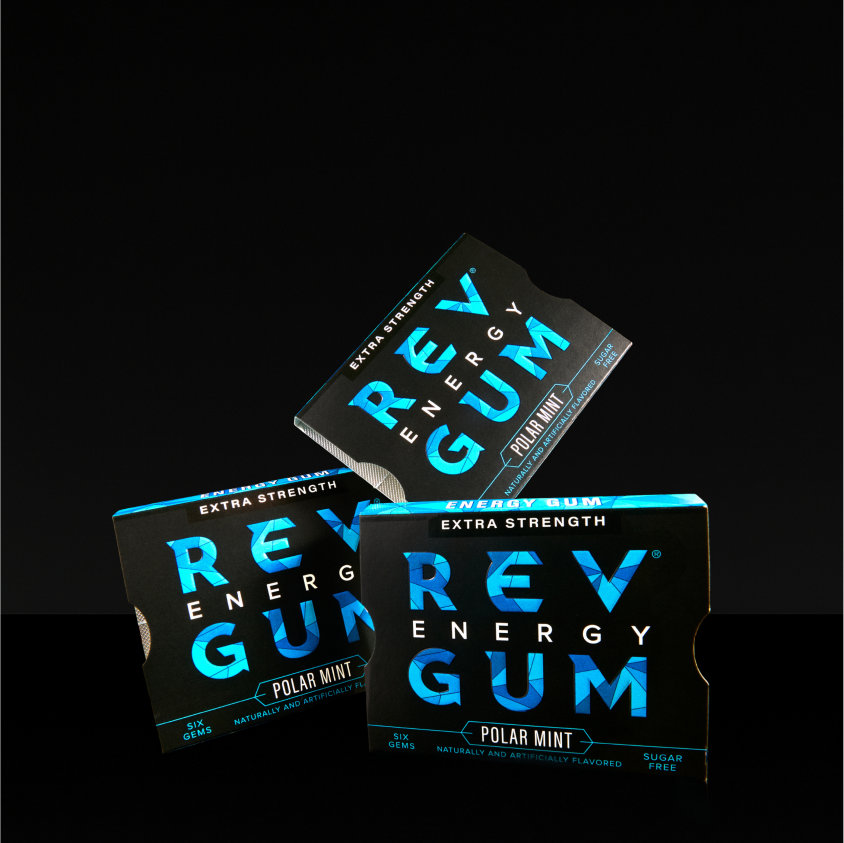
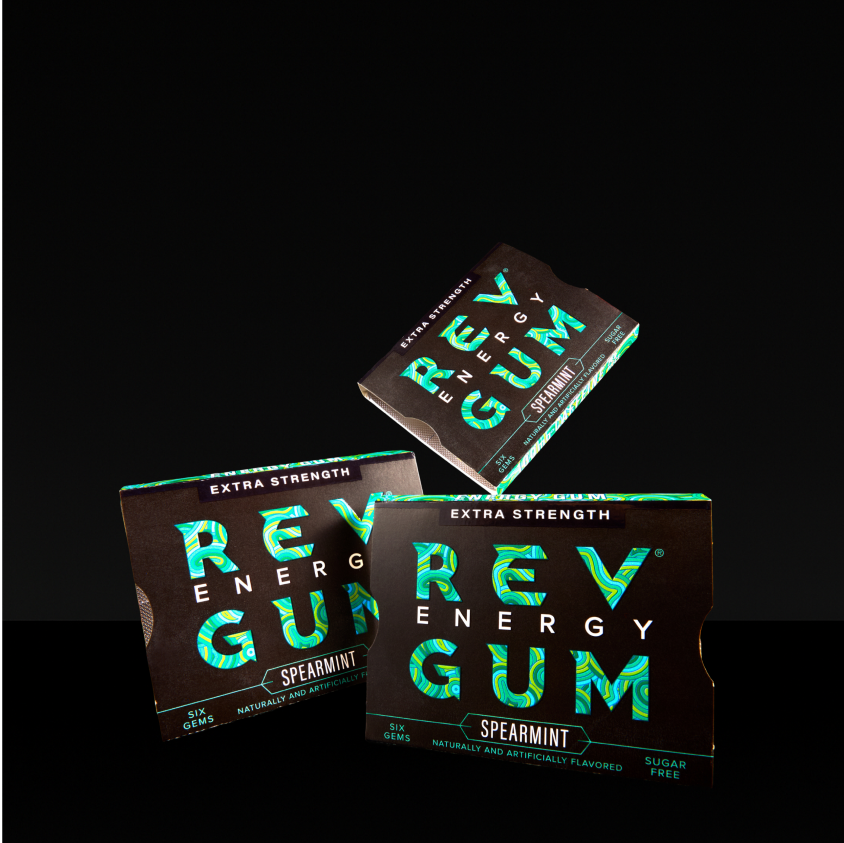
This was a small study (14 athletes) and, importantly, it did not show a direct sprint-performance benefit in this protocol — the headline finding is the testosterone increase, a marker associated with performance, not a measured performance gain itself. The dose (400 mg / ~4.1 mg/kg) is high — about four pieces of REV Extra Strength — so scale to your own weight and tolerance, and mind your total daily caffeine.


