

STUDY: Caffeinated chewing gum reduces fatigue and improves performance in trained sprinters
Caffeine is well known for endurance, but this 2024 trial tested it where fatigue resistance is everything: the 400-meter sprint. Caffeinated gum helped trained sprinters hold their speed when it mattered most — the brutal final 100 meters.
The Study at a Glance
Design: Double-blind, randomized, placebo-controlled crossover trial
Published: Journal of the International Society of Sports Nutrition, 2024
Participants: 19 trained sprinters (average ~8 years of training experience)
Intervention: Gum with 3 mg of caffeine per kg of body weight (about 200 mg for a 150 lb athlete), chewed for 10 minutes, vs. a placebo gum
Tests: A fatigue-index protocol (six maximal 35 m sprints) followed by a full 400 m time trial, with saliva sampled along the way
What They Found
Caffeine gum delivered on every front:
- Lower fatigue index — 8.1% with caffeine vs. 9.6% with placebo (p=0.046), meaning athletes dropped off less across repeated sprints
- Faster in the final stretch — the 300–400 m segment was 14.73 s vs. 15.23 s (p=0.019), exactly where sprinters fade
- Faster overall 400 m — 53.87 s vs. 54.68 s total (p=0.003)
Saliva tests confirmed the caffeine was absorbed (higher caffeine and α-amylase levels in the caffeine trial). The headline: gum chewed shortly before competing helped athletes maintain speed and resist fatigue in a maximal, anaerobic effort.
Why This Matters for REV
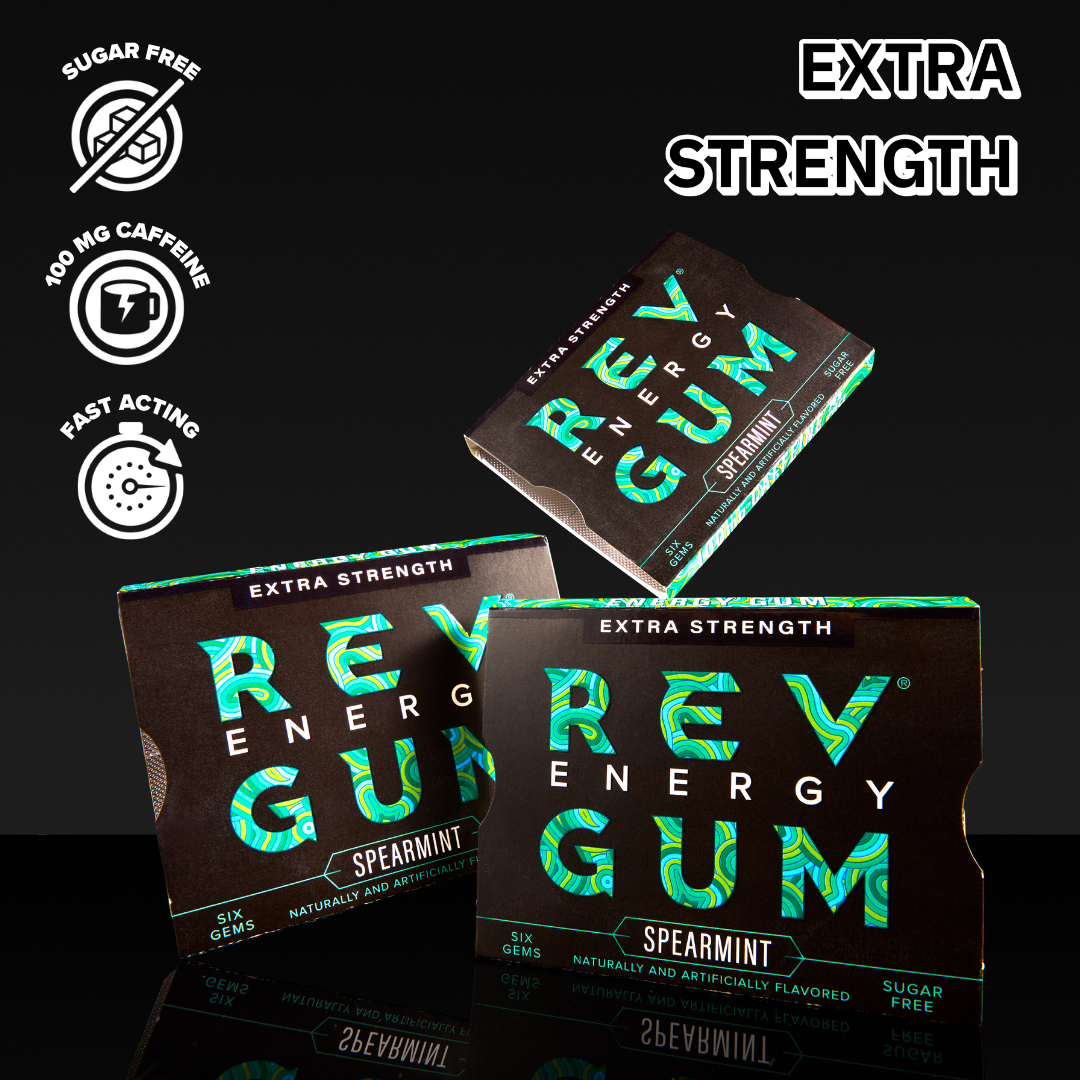
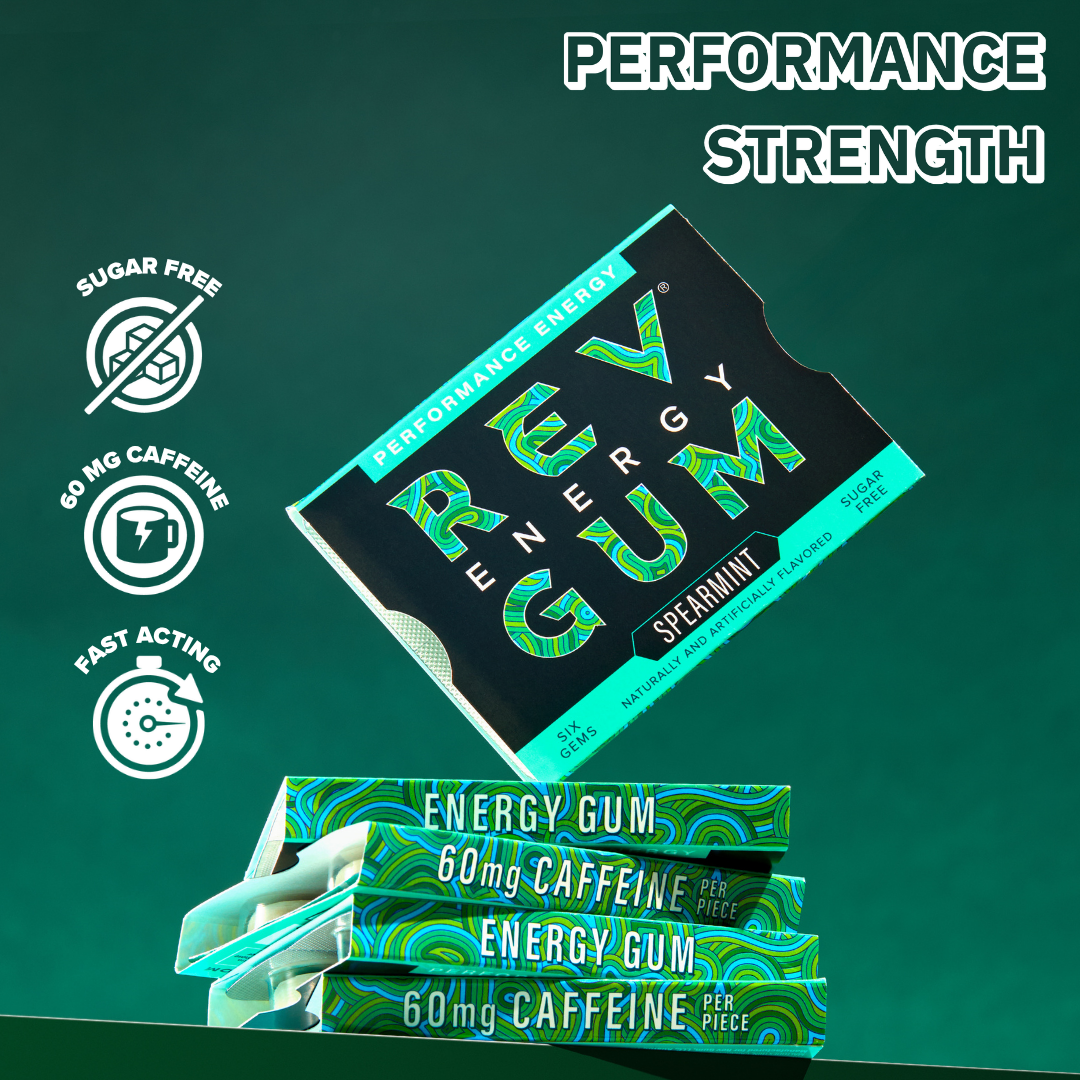
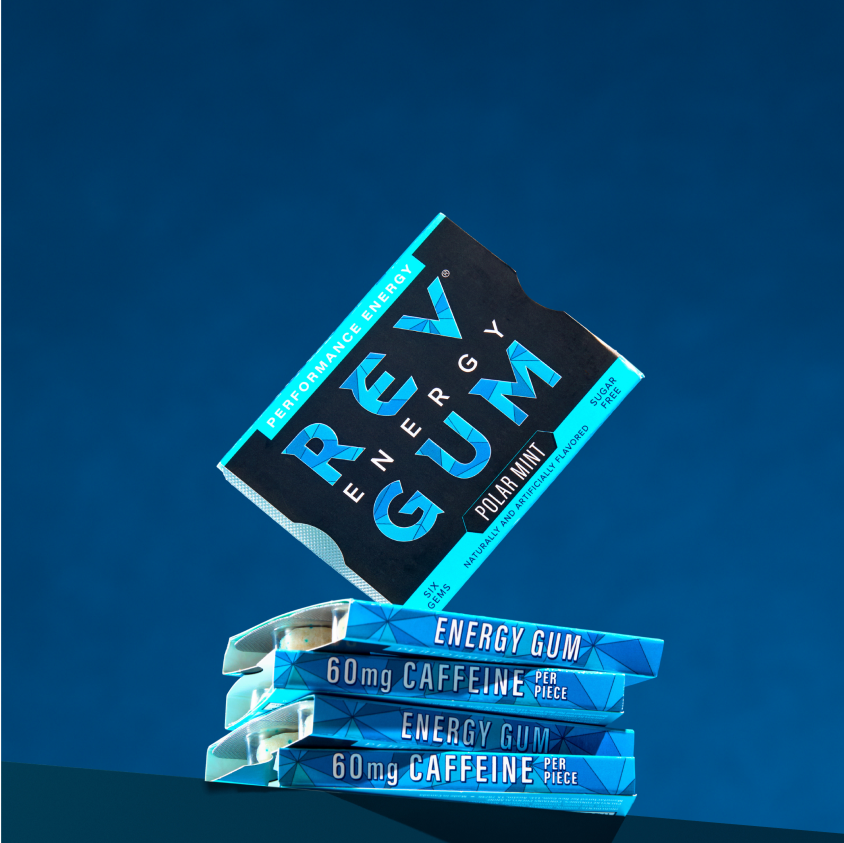
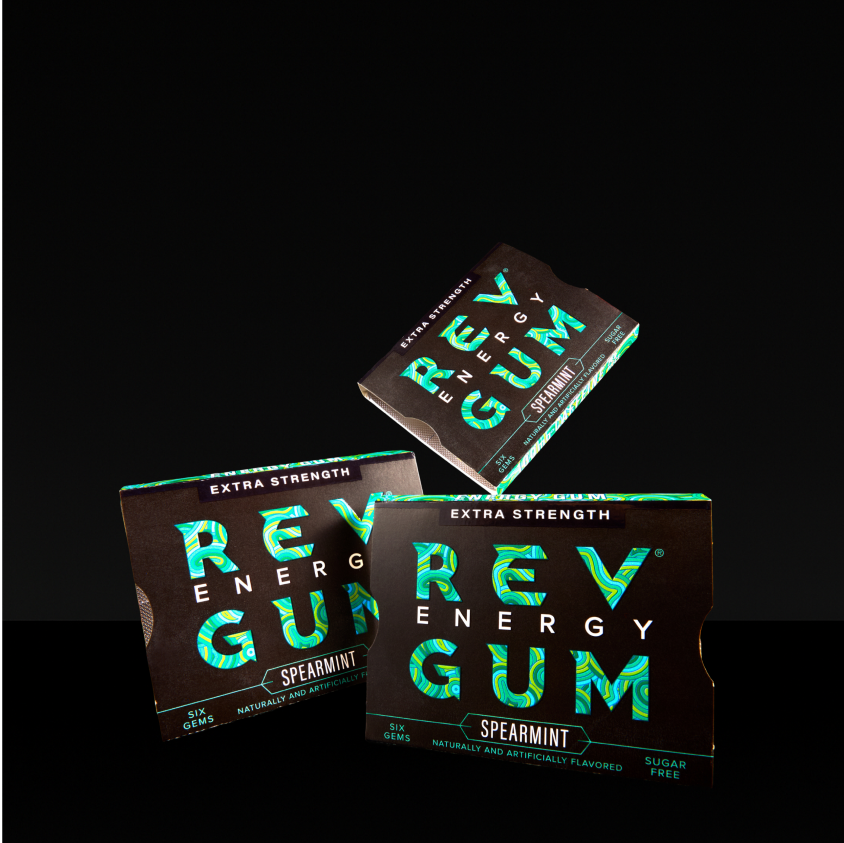
This is REV's exact use case — chew a piece shortly before you perform, and the caffeine is working within minutes. Most caffeine research looks at endurance; this one shows the benefit extends to short, all-out efforts where fatigue resistance in the final seconds decides the outcome. The 3 mg/kg dose lands right in REV's range: roughly two pieces of Extra Strength for many adults.
A Few Caveats
This was a small study (19 athletes) in trained sprinters, so results may differ for recreational athletes. Dose was weight-based (3 mg/kg) — scale to your own body weight and tolerance, and start lower if you're caffeine-sensitive. As always, mind your total daily caffeine intake.
Read the full study: Acute ingestion of caffeinated chewing gum reduces fatigue index and improves 400-meter performance in trained sprinters — Journal of the International Society of Sports Nutrition (2024)